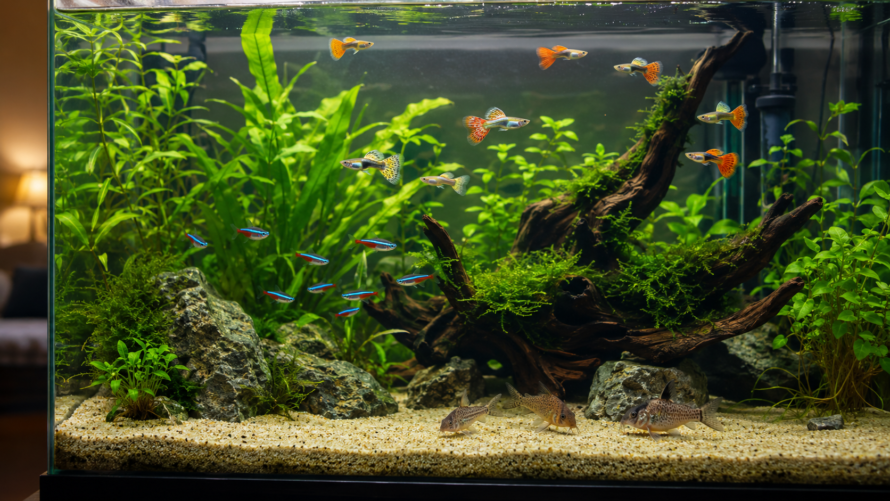
Caring for tropical fish can be one of the most relaxing and enjoyable hobbies. A healthy aquarium brings color and movement into your home, and every fish seems to have its own personality. However, successfully keeping tropical fish involves more than filling a tank with water and adding a few colorful fish.
The good news is that tropical fish care does not have to be complicated. Once you understand a few basic principles, maintaining a healthy aquarium becomes much easier. The most important things are choosing suitable fish, providing enough space, maintaining stable water conditions, feeding properly, and following a regular maintenance routine.
I have kept and bred tropical fish since the late 1960s and owned the FinTastik Tropical Fish store in Antioch, California, for approximately 13 years. One thing I learned during that time is that many aquarium problems can be prevented by getting the basics right from the beginning.
Choose the Right Aquarium
Many new fishkeepers assume a small aquarium will be easier to maintain. In reality, a slightly larger aquarium is usually more forgiving because it holds more water. Temperature and water-quality changes can happen much faster in a tiny tank.
For most beginners, a 20-gallon aquarium is a good starting point. It provides enough room for several small community fish while still being reasonably easy to maintain. Larger aquariums may cost more initially, but the added water volume can make them more stable.
Before buying fish, learn how large they will become as adults. A fish that is only two inches long in the store may grow much larger. Common plecos, oscars, silver dollars, arowanas, and several other popular fish can quickly outgrow a small aquarium.
Avoid choosing a tank based only on the size of the fish when you purchase it. Plan for its adult size and swimming needs.
Cycle the Aquarium Before Adding Fish
A new aquarium needs time to develop beneficial bacteria. These bacteria help process fish waste and keep dangerous substances under control. This process is known as the nitrogen cycle.
Fish produce ammonia through their waste and breathing. Uneaten food and decaying plant material also create ammonia. Ammonia is toxic to fish, even when the water looks clean.
Beneficial bacteria convert ammonia into nitrite, which is also harmful. Another group of bacteria converts nitrite into nitrate. Nitrate is less dangerous and is controlled through water changes, live plants, and sensible stocking.
Whenever possible, cycle a new aquarium before adding fish. Use a liquid water-testing kit to monitor ammonia, nitrite, and nitrate. A cycled aquarium should have zero ammonia, zero nitrite, and a manageable nitrate level.
A new aquarium commonly takes about four to six weeks to cycle, although it may take longer. The exact time depends on temperature, pH, the ammonia source, and whether beneficial bacteria from an established aquarium are added. Do not judge the cycle by the calendar alone. Continue testing the water and wait until ammonia and nitrite consistently return to zero before gradually adding fish. Nitrate should be present at a manageable level, which can be lowered with a partial water change before the first fish are introduced.
Never assume clear water is safe water. Many dangerous water-quality problems cannot be seen without testing.
Maintain Stable Water Conditions
Fish usually handle stable water conditions better than water that constantly changes. This is why I have always advised fishkeepers not to chase a “perfect” pH number unless the species truly requires special conditions.
Test your tap water and aquarium water so you know what you are working with. Most commonly available community fish can adapt to a reasonable range when changes are gradual and the water remains stable.
Temperature is also important. Many tropical community fish do well between approximately 75°F and 80°F, although every species has its own preferred range. Use a reliable aquarium heater and a separate thermometer so you can confirm the actual temperature.
Sudden changes in temperature or water chemistry can stress fish and make them more vulnerable to illness. When performing water changes, try to match the new water temperature reasonably closely to the aquarium.
Always treat tap water with an aquarium water conditioner that neutralizes chlorine or chloramine before the water reaches your fish.
Use Proper Filtration
The aquarium filter helps remove debris, provides a home for beneficial bacteria, and keeps water circulating. Choose a filter rated for at least the size of your aquarium. A slightly larger filter can be helpful in a heavily stocked tank, as long as the water flow is suitable for the fish.
Filters usually provide three types of filtration:
Mechanical filtration traps waste and floating debris.
Biological filtration provides surfaces where beneficial bacteria can grow.
Chemical filtration uses materials such as activated carbon to remove certain impurities, odors, or medication residue.
The biological part of the filter is especially important. Do not replace all filter media at once unless absolutely necessary. You could remove much of the beneficial bacteria and cause ammonia or nitrite to rise.
Rinse reusable sponges and biological media gently in a bucket of removed aquarium water. Rinsing them under untreated tap water may expose the bacteria to chlorine.
Feed the Fish Without Overfeeding
Overfeeding is one of the most common mistakes in fishkeeping. Fish often act hungry whenever someone approaches the aquarium, but that does not mean they need another meal.
Offer only as much food as the fish can eat within a short time. If food is falling to the bottom and remaining uneaten, you are probably feeding too much.
A varied diet is usually better than relying on one food for every fish. Depending on the species, you may use quality flakes, pellets, algae wafers, frozen foods, freeze-dried foods, or occasional live foods.
Different fish have different nutritional needs. Bettas and many cichlids need a protein-rich diet, while plecos and other grazing fish may require foods containing plant material. Bottom-dwelling fish also need food that actually reaches them. They should not be expected to survive only on leftovers.
Feeding lightly once or twice daily works well for many adult community fish. Young, growing fish may need smaller meals more frequently.
Choose Compatible Fish
A peaceful community aquarium begins with compatible fish. Do not choose fish only because they look attractive together at the store.
Research each species before buying it. Consider:
Adult size
Temperament
Preferred temperature
Water requirements
Swimming level
Diet
Whether it needs to live in a group
Some schooling fish become frightened or stressed when kept alone or in very small numbers. Other fish may become territorial as they mature. A tiny fish may also become food for a larger tank mate, even if the larger fish does not normally seem aggressive.
Avoid adding too many fish at once. Each new fish increases the amount of waste entering the aquarium. Adding fish gradually gives the biological filter time to adjust.
Create a Comfortable Environment
Fish need more than an empty glass box. Plants, rocks, driftwood, caves, and other aquarium-safe decorations can provide hiding places and make fish feel more secure.
The setup should match the species. Corydoras appreciate open bottom areas and smooth substrate. Plecos often enjoy caves and driftwood. Shy fish benefit from plants and shaded areas. Active swimmers need open water.
Live plants can improve the appearance of an aquarium and use some of the nutrients in the water. Beginner-friendly choices include Java fern, Anubias, Amazon swords, Java moss, Cryptocoryne, and hornwort.
Make sure decorations do not have sharp edges that could injure fish. Never use rocks, wood, metal, soap, or household decorations unless you know they are safe for aquarium use.
Follow a Regular Maintenance Schedule
Aquarium maintenance does not mean completely emptying and scrubbing the tank. A total cleaning can disturb the beneficial bacteria and cause sudden changes that stress the fish.
For many aquariums, a weekly partial water change of approximately 20% to 30% is a good starting point. Heavily stocked tanks may need larger or more frequent changes.
During a water change:
Vacuum debris from the substrate.
Remove dead plant leaves and uneaten food.
Clean algae from the viewing glass.
Check the heater and filter.
Observe the fish for unusual behavior.
Test the water when necessary.
The amount and frequency of water changes should be based on your aquarium’s stocking level and test results. There is no single schedule that is perfect for every tank.
Watch Your Fish Every Day
Your fish can tell you a great deal about the condition of the aquarium. Spend a few minutes watching them during feeding time.
Healthy fish should generally be alert, interested in food, and swimming normally for their species. Warning signs may include:
Refusing food
Gasping at the surface
Clamped fins
White spots or unusual patches
Rapid breathing
Scratching against objects
Swollen areas
Long, unusual waste
Hiding more than normal
Sudden aggression or loss of balance
When something appears wrong, test the water first. Poor water quality can cause stress and symptoms that resemble disease. Adding medication without checking the water may make the problem worse.
If you purchase new fish, quarantine them in a separate aquarium when possible. A quarantine period gives you time to watch for illnesses before introducing the fish to your established aquarium.
Breeding Tropical Fish
Breeding fish can be an enjoyable part of the hobby, but every species has different requirements. Livebearers such as guppies may reproduce easily in a community tank. Discus, angelfish, and other egg-laying species may require carefully prepared breeding conditions and special fry care.
A separate breeding aquarium is often helpful because it protects eggs or fry from other fish. Some species require spawning mops, caves, broad plant leaves, slate, or breeding cones.
Before trying to breed any species, learn how to identify the sexes, condition the parents, protect the eggs, and feed the fry. It is also important to have enough room for the young fish as they grow.
Caring for Tropical Fish Successfully
No fishkeeper knows everything, and even experienced people occasionally encounter unexpected problems. The important thing is to observe your aquarium, learn from your experiences, and make changes gradually.
Start with suitable fish, avoid overcrowding, maintain stable water, feed sensibly, and perform regular partial water changes. Those basic habits will prevent many of the problems that cause beginners to become discouraged.
A successful aquarium is not created overnight. Give the tank time to mature, learn about the fish you keep, and enjoy watching your underwater community grow.
Join the conversation in one of our Facebook Groups — share photos of your aquascape, ask questions, and connect with other tropical fish enthusiasts!
For Advanced Tropical Fish & Discus Keepers:
👉 JOIN DISCUS WHATEVER ON FACEBOOK
For Beginner Fish Keepers:
👉 JOIN BEGINNERS FISH KEEPERS ON FACEBOOK