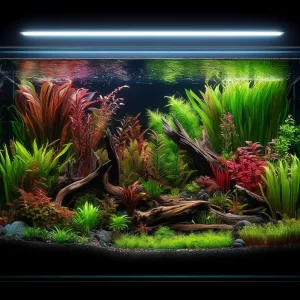
Designing Your Dream Aquascape: A Complete Guide
By Rick Mileski Sr. | 50+ Years of Fish Keeping Experience | Former Tropical Fish Store Owner
📢 Affiliate Disclosure: This page contains affiliate links. If you purchase through these links I may earn a small commission at no extra cost to you. This helps support FinTastik Tropical Fish and allows me to keep providing free content. I only recommend products I personally believe in and would use myself. Thank you for your support!
I’ve been keeping tropical fish for over 50 years and ran my own tropical fish store for years. In that time I’ve seen hundreds of aquascapes — good ones, bad ones, and everything in between. I’ve also designed plenty of basic aquascapes myself over the years.
What I learned from selling fish and talking to customers every day is this: the best aquascape is one where you can actually see your fish. There’s no point spending hours planting a beautiful tank if your fish disappear into a jungle and nobody can see them!
That’s the philosophy behind everything in this guide. Practical, real world aquascaping advice that actually works in a home aquarium.
What Is Aquascaping?
Aquascaping is the art of arranging aquatic plants, rocks, driftwood, and decorations in your aquarium to create a beautiful natural underwater landscape.
A well designed aquascape:
- ✅ Makes your aquarium look stunning
- ✅ Provides hiding places and security for fish
- ✅ Improves water quality through live plants
- ✅ Creates a natural environment fish thrive in
- ✅ Becomes a living piece of art in your home
Rick’s Core Aquascaping Philosophy
After years of keeping fish and running a tropical fish store I developed a simple aquascaping approach that works beautifully every time:
Plants low to high from front to back — and keep the front clear!
- Front of tank — Keep this mostly open. No tall plants blocking the view
- Middle of tank — Medium height plants filling in the midground
- Back of tank — Tall background plants creating height and depth
This simple layout does two things perfectly:
- Creates a beautiful sense of depth and dimension
- Keeps your fish visible so you can actually enjoy them!
When I had my fish store, customers always wanted to see the fish clearly. Nothing was more frustrating than a beautifully planted tank where the fish were constantly hidden. Keep the front open and your aquascape will always look stunning!
Step 1: Plan Your Layout Before You Plant
The biggest mistake beginners make is throwing plants in randomly and hoping for the best. Take 10-15 minutes to plan your layout first — it saves hours of frustration later.
Simple planning tips:
- Sketch a rough layout on paper first
- Decide where your focal point will be
- Plan your foreground, midground and background zones
- Choose a main piece of driftwood or rock as your centerpiece
💡 Rick’s Tip: In my fish store days I noticed the most stunning aquascapes always had one strong focal point — usually a dramatic piece of driftwood or an interesting rock formation. Everything else in the tank supported that centerpiece. Start with your focal point and build around it!
Great focal point options:
- Mopani Driftwood — dramatic natural driftwood perfect as a centerpiece
- Dragon Stone Rock — stunning natural rock perfect for aquascapes
- Malaysian Driftwood — natural looking wood that releases tannins fish love
Step 2: Choose The Right Substrate
Your substrate is the foundation of your aquascape. For planted tanks a quality substrate makes a huge difference in plant growth and overall appearance.
Best aquascaping substrates:
- Fluval Plant and Shrimp Stratum — excellent nutrient rich substrate for planted tanks
- ADA Aqua Soil Amazonia — the gold standard aquascaping substrate
- CaribSea Eco-Complete Planted Aquarium Substrate — great value planted tank substrate
- Seachem Flourite Black Sand — beautiful dark substrate that makes fish colors pop
💡 Rick’s Tip: Dark substrate makes your fish colors look dramatically more vibrant — especially colorful tropical fish like discus, angelfish, and tetras. I always recommend dark substrate for display tanks!
Step 3: Choose Your Plants
Following my low to high philosophy, here are the best plants for each zone.
Foreground Plants (Low — Front of Tank)
Keep these short. They carpet the front of your tank without blocking the view:
- Dwarf Baby Tears — beautiful carpet plant
- Monte Carlo — easy carpet plant for beginners
- Dwarf Hairgrass — classic foreground carpet
- Java Moss — versatile and easy to grow
Recommended:
- Java Moss Live Aquarium Plant
- Dwarf Hairgrass
Midground Plants (Medium Height — Middle of Tank)
These fill in the middle section beautifully:
- Anubias Nana — extremely hardy, low light
- Java Fern — bulletproof beginner plant
- Cryptocoryne Wendtii — beautiful and easy
- Bucephalandra — stunning colors, low light
Recommended:
- Anubias Nana Live Aquarium Plant
- Java Fern Live Aquarium Plant
- Cryptocoryne Wendtii Live Aquarium Plant
Background Plants (Tall — Back of Tank)
These create height, depth and a lush backdrop:
- Vallisneria — tall, graceful and easy
- Amazon Sword — classic background plant
- Rotala Rotundifolia — beautiful reddish color
- Hornwort — fast growing and great for water quality
Recommended:
Step 4: Rick’s Secret Weapon — Super Glue!
Here’s one of the best practical tips I can share from years of aquascaping experience: use super glue to attach plants to rocks and driftwood!
Specifically, use cyanoacrylate gel — the gel version of super glue. Once it cures it’s safe for fish and plants, and it’s an absolute game changer for aquascaping.
What you can attach with cyanoacrylate gel:
- Anubias to rocks and driftwood
- Java Fern to rocks and driftwood
- Bucephalandra to rocks
- Mosses to rocks, driftwood and decorations
How to do it:
- Take your plant or moss out of the water
- Dry the surface you’re attaching to
- Apply a small amount of gel super glue
- Press the plant firmly against the surface
- Hold for 30-60 seconds
- Place back in the aquarium
The plant will grow its roots onto the surface naturally over the following weeks.
- Gorilla Super Glue Gel — the gel type most aquascapers use
- Seachem Flourish Glue — made specifically for aquarium use
💡 Rick’s Tip: This was one of my favorite tips to share with customers in my fish store. Most beginners don’t know about this trick and it completely transforms how you can design an aquascape. Attach java fern and anubias to a beautiful piece of driftwood and you have an instant stunning centerpiece that looks completely natural!
Step 5: Lighting For Your Aquascape
Good lighting is essential for plant growth and making your aquascape look its best.
Best aquascaping lights:
- Finnex Planted+ 24/7 LED Light — excellent full spectrum planted tank light
- Fluval Plant 3.0 LED Light — premium planted tank lighting with app control
- Nicrew Classic LED Plus Planted Tank Light — great budget option for planted tanks
General lighting guidelines:
- Low light plants — 6-8 hours per day
- Medium light plants — 8-10 hours per day
- High light plants — 10+ hours per day (also need CO2)
Use a timer for consistent lighting:
- BN-LINK Digital Outlet Timer — set and forget lighting schedule
💡 Rick’s Tip: Too much light without CO2 and fertilizers causes algae problems. Start with 8 hours per day and adjust from there. When in doubt, use less light, not more!
Step 6: Fertilizers and CO2
Live plants need nutrients to grow. In a heavily planted tank, fertilizers and CO2 make a dramatic difference in plant health and growth rate.
Essential fertilizers:
- Seachem Flourish Comprehensive Plant Supplement — the most popular all round plant fertilizer
- Seachem Flourish Excel — liquid carbon source, a good alternative to CO2
- NilocG Thrive All In One Liquid Fertilizer — excellent complete fertilizer
CO2 systems for serious aquascapers:
- Fluval Pressurized 45g CO2 Kit — excellent starter CO2 kit
- FZONE Aquarium CO2 Regulator — quality regulator for CO2 setups
💡 Rick’s Tip: You don’t need CO2 to have a beautiful aquascape! Stick with low to medium light plants like java fern, anubias, cryptocorynes and vallisneria and you can have a stunning planted tank without CO2 or expensive fertilizers. I recommend this approach for most beginners!
Step 7: Aquascaping Tools
Having the right tools makes aquascaping so much easier:
- Aquascaping Stainless Steel Tool Kit — scissors, tweezers and spatula set
- Curved Aquascaping Scissors — perfect for trimming carpet plants
- Long Aquascaping Tweezers — plant placement without getting your arm wet
- Aquarium Algae Scraper — keeps glass crystal clear
Aquascaping With Discus and Tropical Fish
Since many FinTastik readers keep discus and other tropical fish, here are some important considerations for planted discus tanks.
Discus need higher temperatures — around 82-86°F. This limits which plants you can use successfully.
Best plants for discus tanks:
- Amazon Swords — thrive at discus temperatures
- Vallisneria — does well in warmer water
- Anubias — very tolerant of higher temperatures
- Java Fern — handles warmer water well
- Hornwort — fast growing and handles heat
Plants to be careful with:
- Most carpet plants struggle at discus temperatures
- CO2 demanding plants are more difficult
- Delicate stem plants may melt in higher heat
💡 Rick’s Tip: Many of my customers with discus kept beautifully planted tanks using Amazon swords and vallisneria as their main plants. These two plants thrive at discus temperatures and create a stunning natural looking aquascape. Add some anubias on driftwood using the super glue method and you have a world class discus display tank!
Choosing Fish For Your Aquascape
The best aquascaping fish complement the plants without destroying them. Here are some of my favorites from years of selling tropical fish:
- Neon and Cardinal Tetras — stunning against green plants
- Rummy Nose Tetras — schooling fish that look incredible
- Angelfish — elegant and dramatic in planted tanks
- Discus — the ultimate planted tank centerpiece fish
- Corydoras — peaceful bottom dwellers
- Guppies — colorful and easy
- Dwarf Gouramis — beautiful colors
- Cherry Barbs — stunning red color against green plants
Fish to be careful with:
- Large cichlids may uproot plants
- Goldfish eat most plants
- Buenos Aires Tetras eat soft plants
Maintenance Tips For Your Aquascape
Weekly tasks:
- Trim plants that are getting too tall or bushy
- Remove dead leaves before they rot
- Perform a 20-25% water change
- Clean the glass
- Dose fertilizer as directed
Monthly tasks:
- Vacuum open areas of substrate
- Check and rinse the filter in old tank water
- Prune background plants heavily if needed
Essential maintenance products:
- Python No Spill Clean and Fill Water Changer — makes water changes effortless
- Fluval Gravel Vac — removes waste from substrate
- Seachem Prime Water Conditioner — essential for every water change
Common Aquascaping Mistakes To Avoid
Mistake #1 — Blocking the view with plants. Keep the front of your tank open! Plants low to high from front to back — always.
Mistake #2 — Too many plant species. Stick with 4-6 species. Too many different plants looks chaotic.
Mistake #3 — Wrong plants for your fish. Research plant compatibility with your fish — especially with discus and other high temperature fish.
Mistake #4 — Skipping fertilizers. Even low light plants benefit from regular fertilization.
Mistake #5 — Too much light too soon. Start with less light and work up. Too much light without CO2 causes algae outbreaks.
Mistake #6 — Not using the super glue trick! Cyanoacrylate gel is a game changer. Use it!
Final Aquascaping Tips From Rick
After 50+ years of keeping tropical fish and running a fish store, here’s my honest summary:
The best aquascape is one YOU enjoy looking at every day. Don’t get too caught up in strict rules or copying magazine layouts. Start simple, keep the front clear so you can see your fish, use the super glue trick for attaching plants to hardscape, and build from there.
A planted aquarium is a living, changing work of art. It grows and evolves over time — and that’s what makes it so rewarding!
🐠 Have Questions About Aquascaping?
Join the conversation in one of our Facebook Groups — share photos of your aquascape, ask questions, and connect with other tropical fish enthusiasts!
For Advanced Tropical Fish & Discus Keepers:
👉 JOIN DISCUS WHATEVER ON FACEBOOK
For Beginner Fish Keepers:
👉 JOIN BEGINNERS FISH KEEPERS ON FACEBOOK
We’d love to see photos of your aquascape — share them in the group that fits you best!
Related Guides
- Top Benefits of Low Light Plants for Your Aquarium
- Caring for Tropical Fish
- Essential Discus Fish Supplies: What You Really Need