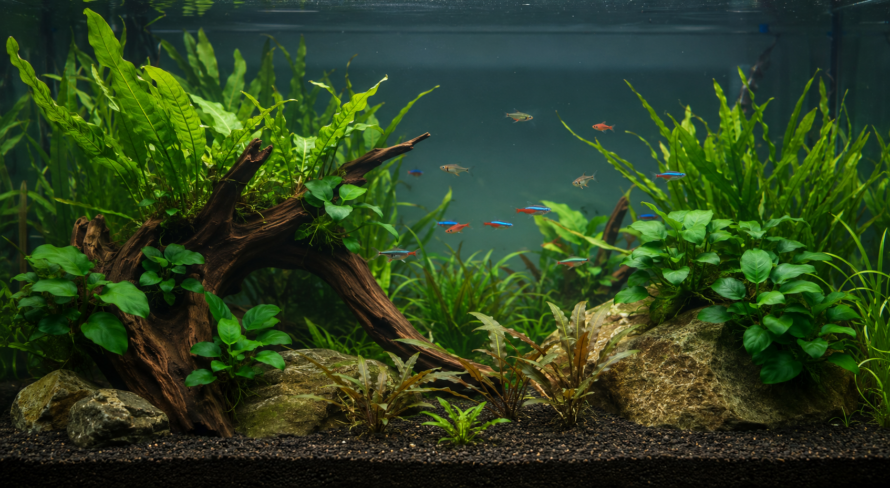
Low light plants are one of the easiest ways to make an aquarium look more natural while creating a healthier and more comfortable environment for your fish. You don’t need expensive lighting, injected carbon dioxide, or years of experience to enjoy a planted aquarium.
These plants are especially helpful for beginners, busy fishkeepers, and anyone who wants the beauty of live plants without turning plant care into a second hobby. Many popular varieties grow well under a basic aquarium light and require only occasional trimming and simple care.
I have kept fish since the late 1960s, and I’ve always enjoyed the way live plants can change the appearance and atmosphere of an aquarium. Even a few well-placed plants can make a plain tank look established, natural, and welcoming.
What Are Low Light Aquarium Plants?
The term “low light” does not mean that these plants can live in complete darkness. It simply means they can grow under less intense lighting than many demanding aquarium plants.
Some varieties grow slowly, while others grow quickly even under moderate lighting. Their exact needs vary, but most low light plants can do well with a standard aquarium LED light and a regular day-and-night schedule.
They are a good choice for beginners because they are usually more forgiving. If the lighting is not perfect or you forget to add fertilizer occasionally, hardy plants such as Java fern and Anubias will often continue growing.
Low Light Plants Are Easy to Maintain
One of the biggest advantages of low light plants is their simple care. High-light planted aquariums may require powerful lighting, added carbon dioxide, frequent fertilization, and regular pruning. That can produce beautiful results, but it may be more work than the average fishkeeper wants.
Most beginner-friendly low light plants need much less attention. Once properly placed, they can usually grow with basic aquarium lighting, occasional fertilizer, and normal aquarium maintenance.
Slow-growing plants such as Anubias and Java fern do not need to be trimmed very often. This makes them excellent choices for someone who wants a natural-looking aquarium without constantly working on the plants.
They Can Help Improve Water Quality
Live aquarium plants use nutrients from the water as they grow. Fish waste, leftover food, and decaying material eventually contribute to nitrate and other nutrients in the aquarium. Plants can use some of these nutrients, helping create a more balanced environment.
Fast-growing plants such as hornwort are especially useful because they can take up nutrients more quickly than slow-growing plants. Floating plants can also be helpful because they have easy access to light and carbon dioxide at the water’s surface.
Plants are not a replacement for a properly cycled aquarium, adequate filtration, water testing, or regular partial water changes. Think of them as an additional tool that works alongside good aquarium care.
A planted aquarium still needs maintenance. However, healthy plant growth can contribute to better water quality and make the aquarium more stable.
Plants Give Fish Natural Shelter
Many fish feel more comfortable when they have plants around them. Plants provide places to hide, rest, explore, and escape the attention of other fish.
This can be especially helpful for shy fish, newly introduced fish, small schooling species, and fish that are occasionally chased by their tank mates. A fish that knows it has a safe place to retreat may spend more time swimming in the open.
Plants can also help break up lines of sight inside the aquarium. This is useful when keeping mildly territorial fish because they cannot constantly see one another from one end of the tank to the other.
Fry and small shrimp also benefit from dense plant growth. Fine-leaved plants and mosses provide hiding places and surfaces where tiny natural foods can develop.
They Make an Aquarium Look More Natural
Live plants add color, texture, depth, and movement to an aquarium. They can soften the appearance of heaters, filter tubes, and other equipment while creating a more natural background for the fish.
You don’t have to fill every inch of the tank with plants. A few Java ferns attached to driftwood, some Anubias placed around rocks, and a group of Cryptocoryne planted in the substrate can make a noticeable difference.
Different shades of green and different leaf shapes also make the aquarium more interesting. Dark Anubias leaves look good next to the longer leaves of Java fern, while Cryptocoryne can add color and texture near the bottom.
The goal is not to create a perfect display overnight. Plants grow and change, and the aquarium often looks better as it matures.
Low Light Plants May Help Control Algae
Aquarium plants and algae use many of the same nutrients. When healthy plants are actively growing, they can compete with algae for some of those nutrients.
Fast-growing species generally help more than very slow-growing plants. Hornwort is a good example because it grows quickly under suitable conditions and can absorb a fair amount of nutrients.
However, low light plants will not automatically eliminate algae. Excess food, long lighting periods, direct sunlight, poor maintenance, and an imbalance of nutrients can still cause algae problems.
Starting with six to eight hours of aquarium lighting per day is often reasonable. You can adjust the schedule depending on plant growth and algae levels. A simple outlet timer will keep the lighting schedule consistent.
Popular Low Light Plants for Beginners
Several hardy plants are well suited to beginner aquariums.
Java Fern
Java fern is one of the most dependable aquarium plants. It has long green leaves and can grow attached to driftwood or aquarium-safe rocks.
Do not bury its thick horizontal stem, called the rhizome. Burying the rhizome can cause it to rot. Attach the plant using thread, aquarium-safe glue, or gently wedge it into a suitable opening in the decoration.
Anubias
Anubias is another hardy, slow-growing plant. Its broad leaves provide a nice resting place for some fish, and it works well in the foreground or middle of an aquarium.
Like Java fern, Anubias has a rhizome that should remain above the substrate. It can be attached to wood, rocks, or aquarium decorations.
Because Anubias grows slowly, algae may develop on its leaves if the lighting is too strong or stays on too long.
Cryptocoryne, often called “crypts,” is available in several varieties, colors, and sizes. Unlike Java fern and Anubias, Cryptocoryne should be planted in the substrate.
Crypts feed heavily through their roots, so root tabs can be helpful when they are planted in plain gravel or sand.
A newly moved Cryptocoryne may lose some or all of its leaves. This is often called “crypt melt.” If the roots remain healthy, the plant will usually grow new leaves after adjusting to its surroundings.
Hornwort
Hornwort is a fast-growing plant that can be left floating or gently anchored. It provides excellent cover for fry and small fish.
Because it grows quickly, hornwort can use a good amount of nutrients from the water. It may need regular trimming to keep it from shading the entire aquarium.
Java Moss
Java moss can grow on rocks, driftwood, mesh, and aquarium decorations. It does not require planting in the substrate and is useful in shrimp tanks and breeding aquariums.
Its dense growth provides hiding places for fry and surfaces where tiny organisms can develop. Java moss can become untidy, but occasional trimming will keep it under control.
Amazon Sword
Amazon swords can tolerate moderate or lower lighting, although they usually appreciate more nutrients than Java fern or Anubias. They grow from the substrate and benefit from root tabs.
Some varieties can become quite large, so check the expected size before placing one in a small aquarium. Amazon swords often make attractive center or background plants.
How to Keep Low Light Plants Healthy
Even easy plants need a few basic things to grow well.
Use an aquarium light on a timer so the plants receive a consistent amount of light each day. Start with six to eight hours and adjust gradually. Leaving the light on for ten or twelve hours will not necessarily make plants grow better and may encourage algae.
Remove dying leaves before they decay. Trim overgrown plants so they do not block light and water circulation. If the plants look pale or stop growing, they may need a suitable aquarium fertilizer.
Root-feeding plants such as Amazon swords and Cryptocoryne may benefit from root tabs. Plants that take nutrients mainly from the water may benefit from a liquid aquarium fertilizer.
Always follow the product directions. Adding extra fertilizer does not guarantee faster growth and may contribute to algae when the plants cannot use it.
Are Low Light Plants Right for Your Aquarium?
Low light plants are a great choice for most freshwater aquariums. They are attractive, generally easy to maintain, and helpful for creating a more natural home for your fish.
They can provide shelter, use some of the nutrients in the aquarium, and make the tank look established without requiring complicated equipment. They are especially useful for beginners who want to try live plants without starting with demanding species.
Begin with two or three hardy varieties and give them time to adjust. Java fern, Anubias, Cryptocoryne, Java moss, and hornwort are all good possibilities.
Don’t worry if every plant doesn’t look perfect immediately. Plants may lose older leaves after being moved, and some need several weeks before producing noticeable new growth.
With sensible lighting, stable water conditions, and occasional feeding or trimming, low light plants can remain a beautiful and useful part of your aquarium for years.
Join the conversation in one of our Facebook Groups — share photos of your aquascape, ask questions, and connect with other tropical fish enthusiasts!
For Advanced Tropical Fish & Discus Keepers:
👉 JOIN DISCUS WHATEVER ON FACEBOOK
For Beginner Fish Keepers:
👉 JOIN BEGINNERS FISH KEEPERS ON FACEBOOK
We’d love to see photos of your aquascape — share them in the group that fits you best!