The most common reason new fish die is not disease or bad luck. It is adding fish to a tank that has not been cycled. A new aquarium can look crystal clear and still contain water that slowly poisons fish. Cycling the tank first solves this problem, and once you understand how it works, it is simple.
Affiliate Disclosure: This page contains affiliate links. If you purchase through these links, I may earn a small commission at no extra cost to you. As an Amazon Associate, I earn from qualifying purchases. This helps support FinTastik Tropical Fish and allows me to keep providing free guides for aquarium and tropical fish keepers. I only recommend products I personally believe in and would use myself. Thank you for your support! Read our full affiliate disclosure.
Quick Answer
- Cycling grows beneficial bacteria that turn toxic fish waste into much less harmful nitrate
- Most tanks take about 4 to 8 weeks to cycle
- Your tank is cycled when ammonia and nitrite both read 0 and nitrate is present
- You need a liquid test kit to know for sure
- A fishless cycle is the safest method for the fish
What Is the Nitrogen Cycle?
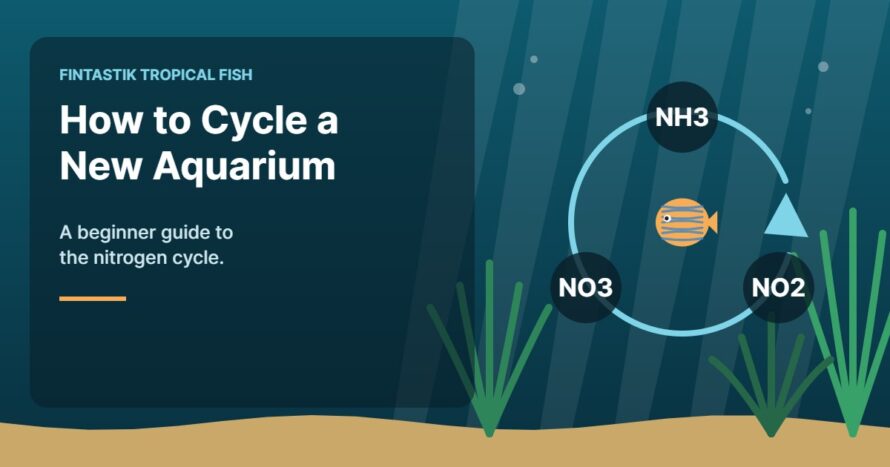
Fish produce waste, and uneaten food and dead plant leaves break down in the water. All of this creates ammonia, which is highly toxic to fish even in small amounts.
In a healthy aquarium, two groups of beneficial bacteria handle the problem:
- The first group turns ammonia into nitrite, which is also toxic
- The second group turns nitrite into nitrate, which is much less harmful and is removed with regular water changes
These bacteria live mostly in your filter media, gravel, and decorations, not floating in the water. A new tank has almost none of them. Cycling is the process of growing enough of these bacteria to handle the waste your fish will produce.
What You Need
- A liquid test kit. A freshwater master test kit tests ammonia, nitrite, nitrate, and pH. Liquid kits are generally more accurate than strips
- Water conditioner. Tap water usually contains chlorine or chloramine, which kills fish and beneficial bacteria. Use a dechlorinator every time you add tap water
- An ammonia source for a fishless cycle, such as ammonium chloride made for fishless cycling, or a small amount of fish food
- Bottled bacteria (optional). Bacteria starter products may help speed up the process
- A running filter and heater. Bacteria need oxygen and steady temperatures to grow
Method 1: Fishless Cycling (Recommended)
Fishless cycling builds up the bacteria before any fish are exposed to ammonia. It is the kindest method and is what many experienced keepers use.
- Set up the tank completely. Add substrate, decorations, plants, and dechlorinated water. Run the filter and heater 24 hours a day
- Add ammonia. Dose to about 2 ppm of ammonia, following the product directions, and test to confirm
- Test every day or two. At first, ammonia will stay high. After a week or two, it will start to drop and nitrite will appear
- Keep feeding the bacteria. When ammonia falls, add more to bring it back to about 2 ppm
- Watch for nitrate. Over the next few weeks, nitrite will rise and then fall as nitrate appears
- Check that the cycle is complete. The tank is ready when it can turn a full dose of ammonia into nitrate within 24 hours, with ammonia and nitrite both at 0
- Do a large water change to bring nitrate down before you add fish, then add fish within a day or two so the bacteria have food
Method 2: Fish-In Cycling
Sometimes fish are already in a new tank. Cycling with fish can work, but it takes extra care to protect them from ammonia and nitrite.
- Start with only a few small, hardy fish, not a full tank
- Feed very lightly, once a day, and remove uneaten food
- Test the water every day
- Do a partial water change whenever ammonia or nitrite climbs above about 0.25 to 0.5 ppm
- Use a water conditioner that is labeled to detoxify ammonia and nitrite for short periods
- Do not add more fish until ammonia and nitrite stay at 0
How to Speed Up Cycling
- Use seeded media. Filter media, gravel, or decorations from an established, healthy tank carry large numbers of beneficial bacteria. This is the fastest way to start a new tank. Only use material from a tank you trust to be disease free
- Add live plants. Plants use some ammonia and nitrate and help stabilize a new tank
- Keep the temperature warm. Bacteria grow faster in warm water, usually around the upper 70s to low 80s°F
- Do not clean the filter too much. Rinsing filter media in tap water or replacing it often removes bacteria. Rinse it gently in tank water instead
Common Cycling Mistakes
- Adding fish on day one because the water looks clear
- Adding too many fish at once, even after cycling. Add fish gradually so the bacteria can catch up
- Skipping the dechlorinator, which can kill the bacteria you are trying to grow
- Replacing all the filter media at once, which can restart the cycle
- Giving up too early. Many cycles seem to stall for a while before nitrite finally drops. Patience usually pays off
Signs of Ammonia or Nitrite Problems
If fish are in the tank, watch for gasping at the surface, red or inflamed gills, clamped fins, lethargy, or loss of appetite. Test the water right away and do a partial water change with dechlorinated water if levels are high.
Frequently Asked Questions
How long does it take to cycle a tank?
Most tanks cycle in about 4 to 8 weeks. Seeded media can shorten this a lot, while cold water or very soft, acidic water can slow it down.
Can I cycle a tank in a day?
Not reliably. Bottled bacteria and seeded media help, but always confirm with a test kit that ammonia and nitrite stay at 0 before adding fish.
Do I need to cycle a quarantine tank?
Yes. A simple way is to keep a spare sponge filter running in your main tank, so it is always ready to move into a quarantine tank.
Final Thoughts
Cycling takes patience, but it is the foundation of every healthy aquarium. Test, wait, and add fish slowly, and you will avoid the most common beginner mistake. For the next steps, see our guide to caring for tropical fish, and visit our sister site, Beginners Fish Keepers, for more beginner-friendly guides.
Related Guides
- Caring for Tropical Fish: A Beginner Guide
- Top Benefits of Low Light Aquarium Plants
- Designing Your Dream Aquascape
Join the conversation in one of our Facebook Groups — share photos of your aquascape, ask questions, and connect with other tropical fish enthusiasts!
For Advanced Tropical Fish & Discus Keepers:
👉 JOIN DISCUS WHATEVER ON FACEBOOK
For Beginner Fish Keepers:
👉 JOIN BEGINNERS FISH KEEPERS ON FACEBOOK