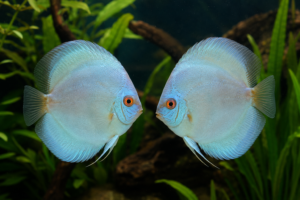
Albino Blue Diamond Discus are among the most beautiful and eye-catching discus fish available in the aquarium hobby. Their pale blue coloration, bright red or pink eyes, graceful movement, and classic rounded body shape make them an impressive centerpiece in a freshwater aquarium.
Discus belong to the genus Symphysodon and originate from the Amazon River basin in South America. The Albino Blue Diamond, however, is a selectively developed aquarium strain rather than a naturally occurring wild color form.
Appearance of the Albino Blue Diamond Discus
A healthy Albino Blue Diamond Discus should have a tall, rounded body that resembles a disc when viewed from the side. Its body should not be long, narrow, or football-shaped. The dorsal and anal fins follow the rounded outline of the fish, giving it the elegant shape for which discus are famous.
The body normally displays a smooth pale-blue, powder-blue, or blue-white coloration. Some fish may appear almost white in certain lighting, while others develop a stronger blue or turquoise color as they mature.
Despite the name “Blue Diamond,” these fish do not normally have a diamond-shaped marking on their bodies. The name describes the strain and its attractive blue coloration. Albino Blue Diamonds also lack the dark vertical stress bars and heavy body patterns seen on many other discus varieties.
One of their most recognizable features is their red or pink eyes. The albino traits reduce dark pigmentation, giving the fish a softer and brighter appearance.
Color, body shape, and intensity can vary between individual fish. Genetics, age, diet, health, water quality, and aquarium lighting can all affect how the fish appears.
Temperament and Behavior
Albino Blue Diamond Discus are generally peaceful and graceful fish. They often swim slowly through the aquarium and may spend time together in a loose group.
Although discus are peaceful, they still develop a social order. Occasional chasing or mild pushing can occur, especially when a group is establishing its hierarchy. A fish that is constantly hiding, becoming darker, or being prevented from eating may be experiencing too much stress or bullying.
Discus usually feel more secure when kept with other discus rather than alone. They may be shy when first introduced to a new aquarium but often become more confident once they adjust to their surroundings and recognize the person feeding them.
Aquarium Conditions
Discus need warm, clean, stable water. A temperature around 82°F to 86°F works well for many aquarium-raised adult discus. The exact temperature can vary according to their age, health, tank mates, and the conditions in which they were raised.
Although discus are often associated with soft, acidic water, many domestically raised fish adjust well to moderately hard water and a higher pH. Stability is more important than repeatedly adding chemicals to chase a particular pH number.
A properly cycled aquarium with efficient filtration is essential. Ammonia and nitrite should remain at zero, while nitrate should be controlled through sensible feeding and regular partial water changes.
Discus also appreciate calm surroundings, open swimming space, and areas where they can retreat when they feel nervous. Avoid strong currents that force them to struggle constantly.
Feeding Albino Blue Diamond Discus
Albino Blue Diamond Discus should receive a varied, high-quality diet. They do not have to be fed only live or frozen foods.
Good choices include quality discus pellets or granules, frozen brine shrimp, mysis shrimp, and other appropriately prepared foods. Feed portions the fish can finish without allowing large amounts of food to remain in the aquarium.
A varied diet supports healthy growth, body condition, and coloration. Uneaten food should be removed because it can quickly reduce water quality, especially in a warm discus aquarium.
Choosing Tank Mates
Discus can live in a peaceful community aquarium, but tank mates must be selected carefully. Suitable fish should tolerate the warm water preferred by discus and should not be aggressive, overly active, or likely to outcompete them at feeding time.
Calm, warm-water-compatible species are usually better choices than fin-nippers or fast, boisterous fish. Avoid overcrowding because discus need adequate swimming room and excellent water quality.
Discus require more attention than many common community fish, but they do not need to be mysterious or impossible to maintain. The most important requirements are a fully cycled aquarium, stable warm water, good filtration, regular partial water changes, and proper feeding.
When these needs are met, Albino Blue Diamond Discus can become confident, responsive aquarium fish. Their brilliant pale-blue color, red eyes, rounded shape, and peaceful personality make them a beautiful choice for experienced fishkeepers and dedicated beginners who are prepared to provide consistent care.