Benefits of Freeze-Dried Black Worms
High Protein Content: Black worms are rich in protein, which is crucial for the healthy growth and development of fish. This makes them an excellent choice for conditioning fish for breeding or simply ensuring they have a nutritious diet.
Affiliate Disclosure: This page contains affiliate links. If you purchase through these links, I may earn a small commission at no extra cost to you. As an Amazon Associate, I earn from qualifying purchases. This helps support FinTastik Tropical Fish and allows me to keep providing free guides for aquarium and tropical fish keepers. I only recommend products I personally believe in and would use myself. Thank you for your support! Read our full affiliate disclosure.
Safe and Convenient: Because they are freeze-dried, these worms carry a much lower risk of bringing parasites and pathogens into your aquarium than live food does. The freeze-drying process also makes them easy to store and handle without the mess that comes with live foods.
Enhances Fish Coloration: Regular feeding with black worms can help enhance the natural coloration of fish, making them more vibrant and visually appealing.
Stimulates Appetite: Many fish are more enticed to eat when offered foods that mimic their natural diet. Black worms can encourage picky eaters to feed more regularly and robustly.
Considerations
Nutritional Balance: While black worms are nutritious, they shouldn’t be the only food source for your fish. It’s important to provide a varied diet that includes other types of food like flakes, pellets, and other freeze-dried options to ensure a balanced intake of nutrients.
Overfeeding: Like with any food, overfeeding with black worms can lead to water quality issues such as increased ammonia levels. It’s crucial to feed in moderation, make sure all food is eaten within a few minutes, and test your water regularly.
Hydration: When feeding loose worms, it’s often recommended to rehydrate them in a bit of aquarium water first. This makes them easier to digest and reduces the risk of upsetting the fish’s digestive system. (The glass-feeding method below is the exception, because the worms soak up water while stuck to the glass.)
Usage Tips
-
- Rehydrate the worms: Soak them in tank water for a few minutes before feeding to make them easier to eat and digest.
-
- Feed as part of a varied diet: Combine with other food types to ensure a balanced diet.
-
- Monitor your fish: Observe how your fish respond to freeze-dried black worms, and adjust feeding amounts based on their behavior and condition.
Tips for Feeding Freeze-Dried Black Worms on Aquarium Glass
-
- Use them dry: Take a small pinch or a piece of a freeze-dried black worm cube straight from the container. Don’t soak them first.
-
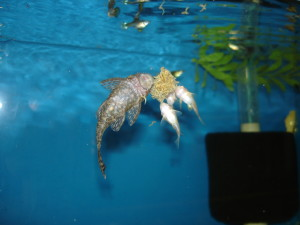
- Press firmly: Reach into the tank and press the dry worms against the inside of the glass, below the waterline. As they absorb water, they become sticky and cling to the glass.
-
- Feed in small amounts: Stick on only as much as your fish can eat within a few minutes. This helps prevent overfeeding and keeps your tank cleaner.
-
- Spread out the feeding spots: Place the worms at different spots on the glass to encourage your fish to swim around and “hunt” the food, which is great for their physical and mental activity.
-
- Monitor fish response: Observe how quickly your fish take to the food and adjust the amount and frequency of feeding based on their interest and appetite. Some fish are more enthusiastic about food on the glass than others.
-
- Clean up: Always check for uneaten worms after feeding and remove them with a turkey baster or small net to help maintain good water quality.
Feeding freeze-dried black worms stuck to the aquarium glass is an excellent way to engage your fish’s natural instincts and make feeding time more stimulating. It also gives you a good opportunity to watch your fish up close, check their health, and enjoy their natural behaviors.
Adding freeze-dried black worms to your fish feeding routine can be a great way to give your fish a nutritious and enjoyable meal. Just remember to keep an eye on portion sizes and mix up the diet to keep your fish healthy and thriving.
Join the conversation in one of our Facebook Groups — share photos of your aquascape, ask questions, and connect with other tropical fish enthusiasts!
For Advanced Tropical Fish & Discus Keepers: 👉 JOIN DISCUS WHATEVER ON FACEBOOK
For Beginner Fish Keepers: 👉 JOIN BEGINNERS FISH KEEPERS ON FACEBOOK
We’d love to see photos of your aquascape — share them in the group that fits you best!