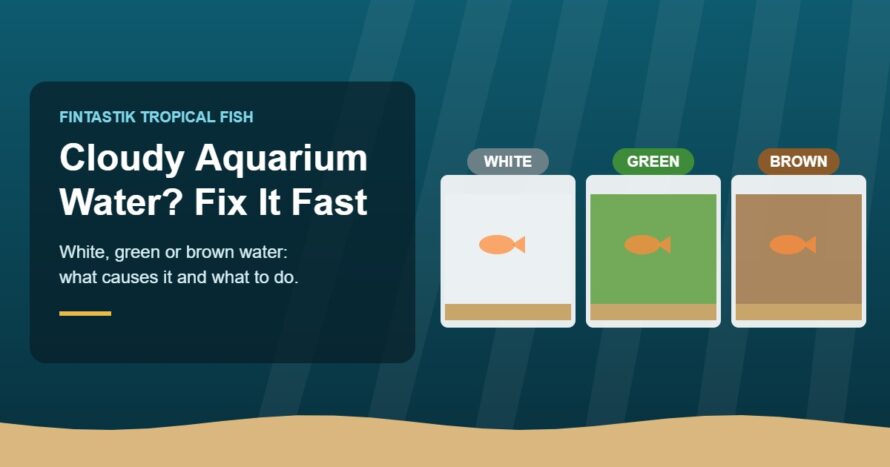
Cloudy water is one of the most common problems new fish keepers run into, and it can look scary. The good news is that the color of the cloudiness tells you most of what you need to know. White, green, and brown water each have different causes and different fixes.
Affiliate Disclosure: This page contains affiliate links. If you purchase through these links, I may earn a small commission at no extra cost to you. As an Amazon Associate, I earn from qualifying purchases. I also earn a commission on purchases made through my Walmart and eBay links. This helps support FinTastik Tropical Fish and allows me to keep providing free guides for aquarium and tropical fish keepers.
Quick answer: White or gray cloudy water is usually a bacteria bloom in a new tank, dust from new gravel, or too much food. Green water is free-floating algae from too much light and extra nutrients. Brown or tea-colored water is usually tannins from driftwood or leaves, which is harmless. Test your ammonia and nitrite first, feed less, keep your filter running, and fix the cause instead of tearing the tank down.
First: Test Your Water
Before you change anything, test for ammonia and nitrite. Cloudy water by itself does not always hurt fish, but the problem behind it sometimes does. A liquid freshwater test kit (also on eBay) gives you real numbers. Test strips can miss a problem, as I explain in Aquarium Test Strips vs. a Liquid Test Kit.
- Ammonia and nitrite at 0: the cloudiness is mostly cosmetic. Be patient and work on the cause.
- Ammonia or nitrite above 0: do a 25 to 50 percent water change with a dechlorinator, feed very lightly, and keep testing every day until both read 0. A conditioner like Seachem Prime (also on eBay) also binds ammonia and nitrite for a short time while your filter catches up.
White or Gray Cloudy Water
1. A Bacteria Bloom in a New Tank
This is the most common cause. In a new aquarium, free-floating bacteria multiply quickly before the good bacteria settle into your filter and gravel. The water turns milky white, often within a few days of adding water or fish.
Fix: Leave it alone. A bacteria bloom usually clears on its own in a few days to two weeks as the tank settles. Keep the filter running, feed lightly, and test ammonia and nitrite. Big water changes and heavy cleaning can make a bloom last longer. Bottled bacteria such as Tetra SafeStart at Walmart can help a new tank get going. To understand what is happening, read How to Cycle a New Aquarium.
2. Dust From New Gravel or Sand
If the water turned cloudy right after you filled the tank, it is probably fine dust from the substrate. The water looks hazy or gray, and the haze settles when the water is still.
Fix: Your filter will usually clear it within a day or two. A pad of filter floss in the filter catches fine particles faster. Next time, rinse new gravel in a bucket until the water runs clear.
3. Too Much Food or Waste in an Established Tank
If a tank that has been clear for months suddenly turns white or gray, look for extra waste. Common causes are overfeeding, a dead fish or snail hidden behind decorations, too many fish, or a filter that is clogged.
Fix:
- Feed only what your fish eat in about 2 minutes, once or twice a day.
- Look behind and under decorations for anything dead or rotting.
- Use a gravel siphon to clean the gravel during a partial water change.
- Rinse your filter sponge in a bucket of old tank water. Never rinse filter media in tap water, because the chlorine kills the good bacteria that keep your fish alive. Do not replace all of your filter media at the same time.
4. Cloudy Right After a Water Change
Tiny air bubbles from the tap can make new water look milky for a few hours, and stirring up the gravel can do the same. If it clears by the next day, there is nothing to fix. Always treat new water with a dechlorinator such as Tetra AquaSafe at Walmart.
Green Water
Green water is caused by tiny free-floating algae. The water looks like pea soup, and you often cannot see the back of the tank. It is usually caused by too much light, especially direct sunlight, together with extra nutrients from overfeeding.
Fix:
- Cut the light. Keep the light on 6 to 8 hours a day. An inexpensive plug-in outlet timer makes this automatic.
- Block direct sunlight. Move the tank or cover the window side.
- Feed less and keep up with partial water changes.
- Use a UV sterilizer. This is the most reliable fix. Water passes by a UV bulb that kills the floating algae, and green water usually clears within days. See aquarium UV sterilizers on Amazon or on eBay.
- Try a blackout. Cover the whole tank with a blanket or towels for 3 to 4 days with the light off. Keep the filter and air running and feed very lightly. Without light, the algae die off.
Water changes alone rarely clear green water, because the algae grow back quickly. Live plants help over time, because they use the same nutrients the algae need.
Brown or Tea-Colored Water
If the water is clear but tinted yellow or brown, like weak tea, the cause is almost always tannins. Tannins leach out of driftwood, dried leaves, and some plant roots. They are harmless, and many soft-water fish such as discus and tetras come from tea-colored rivers in the wild. Tannins can lower pH slightly.
Fix (only if you don’t like the color):
- Add activated carbon to your filter, or use Seachem Purigen, which removes the color and can be recharged.
- Keep up with regular partial water changes. The color fades over time.
- Soak new driftwood in a bucket for a week or two, changing the water often, before it goes in the tank.
If the water is brown and cloudy, or it smells bad, it is not tannins. Look for rotting food, a dead fish, or a filter that is overdue for cleaning, then follow the steps for white cloudy water above.
What Not to Do
- Don’t empty and scrub the whole tank. It throws away your good bacteria and starts the cycle over.
- Don’t replace all of your filter media at once, and never rinse it in tap water.
- Don’t add more fish until the water is clear and ammonia and nitrite read 0.
- Don’t rely on chemicals first. A water clarifier clumps fine particles so your filter can catch them. It can help with gravel dust, but it does not fix the cause. Algae-killing chemicals can also lower oxygen when a lot of algae dies at once.
Quick Cloudy Water Checklist
| Color | Most likely cause | Best fix |
|---|---|---|
| White or milky, new tank | Bacteria bloom | Wait, feed lightly, test ammonia and nitrite |
| Gray haze after filling | Gravel or sand dust | Let the filter clear it; add filter floss |
| White, established tank | Overfeeding or hidden waste | Feed less, siphon gravel, clean filter in tank water |
| Green | Free-floating algae | Less light, timer, UV sterilizer or blackout |
| Clear brown or tea | Tannins from wood or leaves | Harmless; carbon, Purigen or water changes |
| Brown and cloudy or smelly | Rotting food, dead fish or dirty filter | Find the source, water change, clean filter |
Frequently Asked Questions
How long does cloudy water last in a new tank?
A bacteria bloom usually clears in a few days to two weeks. Keep the filter running, feed lightly, and test your water while you wait.
Is cloudy water harmful to fish?
The cloudiness itself usually is not. The danger is what can come with it, such as ammonia or nitrite in a new or overfed tank. That is why testing comes first.
Should I do a water change if my tank is cloudy?
Yes if ammonia or nitrite is above 0. If they read 0 and the tank is new, smaller changes and patience work better than big ones, because big changes can make a bacteria bloom last longer.
Do water clarifiers work?
They can clear fine dust quickly, but they do not fix overfeeding, algae, or a tank that is not cycled. Use one only after you have dealt with the cause.
Why is my fish tank cloudy after I cleaned it?
Usually stirred-up gravel or air bubbles from the tap, which clear within hours. If it stays cloudy for days, you may have rinsed the filter in tap water or replaced too much media, which can trigger a bacteria bloom.
The Bottom Line
Let the color guide you. White in a new tank means patience, green means too much light, and clear brown is just tannins. Test ammonia and nitrite first, feed less, keep your filter healthy, and give the tank time. Clear water comes from a stable, well-maintained tank, not from a bottle.
Related guides:
- How to Cycle a New Aquarium
- Aquarium Test Strips vs. a Liquid Test Kit
- Best Filter for a 10-Gallon Tank
- Best Beginner Aquarium Kits
Join the conversation in one of our Facebook Groups — share photos of your tank, ask questions, and connect with other tropical fish enthusiasts!
For Advanced Tropical Fish & Discus Keepers:
👉 JOIN DISCUS WHATEVER ON FACEBOOK
For Beginner Fish Keepers:
👉 JOIN BEGINNERS FISH KEEPERS ON FACEBOOK